What “Boat Deletion” Means for a Delaware-Documented Vessel
Delaware itself does not operate an international ship registry in the way Malta or the Marshall Islands do. Instead, owners typically use a Delaware limited liability company to hold title to the vessel, which is then documented with the U.S. Coast Guard’s National Vessel Documentation Center. When that same vessel later moves to a foreign flag, federal regulation requires the existing Certificate of Documentation to be formally deleted before the new registry will accept the boat.
Under 46 CFR § 67.171, a Certificate of Documentation becomes invalid, and the vessel becomes subject to deletion, once it is placed under a foreign flag, sold to a non-citizen, or no longer meets the conditions for U.S. documentation. The owner must notify the National Vessel Documentation Center and request a certificate evidencing that deletion before the next flag state will process the new registration.
Why Delaware Remains a Popular Base for US-Documented Yachts
Owners choose a Delaware LLC structure for a mix of practical and financial reasons:
- Strong privacy protections, since beneficial ownership is not publicly listed on the certificate
- Limited liability, which separates personal assets from vessel-related claims
- Comparatively low formation and franchise fees relative to other U.S. states
- Straightforward compatibility with U.S. Coast Guard documentation requirements
These advantages make Delaware a common starting point, but they do not lock an owner into keeping the boat under U.S. documentation permanently. Many eventually move to an international flag as cruising patterns, tax residency, or ownership arrangements change.
The Deletion Process, Step by Step
Working with a specialist consultant generally keeps this process tight and predictable. A typical filing moves through five stages.
Step 1: Submit Vessel Information
The owner provides core details — boat name, registration number, hull identification number, build year, and owner or company documentation, including a passport where applicable.
Step 2: Document Review
Before anything reaches the authorities, the paperwork is checked for completeness. Catching a missing document or mismatched detail at this stage is what prevents the application from bouncing back later.
Step 3: Official Submission
The deletion request is filed directly with the relevant Delaware registry authority, confirming no outstanding liens or unresolved mortgage claims stand in the way.
Step 4: Registry Processing
The authority verifies the application and the supporting documentation before approving the removal.
Step 5: Receive the Deletion Certificate
Once approved, the owner receives an official deletion certificate confirming the vessel’s flag has been cancelled and its registration removed — the exact proof most new flag states require before accepting a fresh application.
Documents Typically Required
A standard deletion filing generally includes:
- The original Certificate of Documentation or a statement explaining why it cannot be surrendered
- A notarized bill of sale, if the vessel has been sold
- Evidence of mortgage satisfaction or written mortgagee consent
- A cover letter stating the specific reason for deletion
- Proof of the new flag state’s willingness to accept the vessel, if required by that registry
Missing even one of these items is the most common reason deletion requests stall, so it helps to confirm the new registry’s acceptance requirements before filing. Many owners prefer to hand this step to a specialist consultant who communicates directly with the Delaware registry, prepares the filing, and delivers the official deletion certificate once approved — often for a fixed fee rather than an open-ended hourly rate.
Choosing Your Next Flag: What to Compare
Once deletion is underway, the real decision is which flag state to move to. A few factors matter more than brand recognition or marketing. Tax treatment is often the starting point, since some jurisdictions impose VAT or import duties depending on where the vessel will primarily cruise, while others remain neutral on that front. Crew and safety compliance also vary meaningfully: larger yachts may need to meet specific international conventions depending on gross tonnage and intended use, whereas smaller pleasure craft usually face lighter requirements.
Processing speed is another practical consideration. Digital registries, built around online submission and electronic verification, generally move faster than registries that still rely on paper filings and in-person processing. Finally, ongoing obligations deserve close attention before committing to a flag. Some registries require periodic data confirmation, recurring inspections, or annual fee renewals, while others are closer to a one-time filing with minimal follow-up. Weighing these four factors together, rather than focusing on sticker price alone, tends to produce a better long-term decision.
Popular Flag States Compared
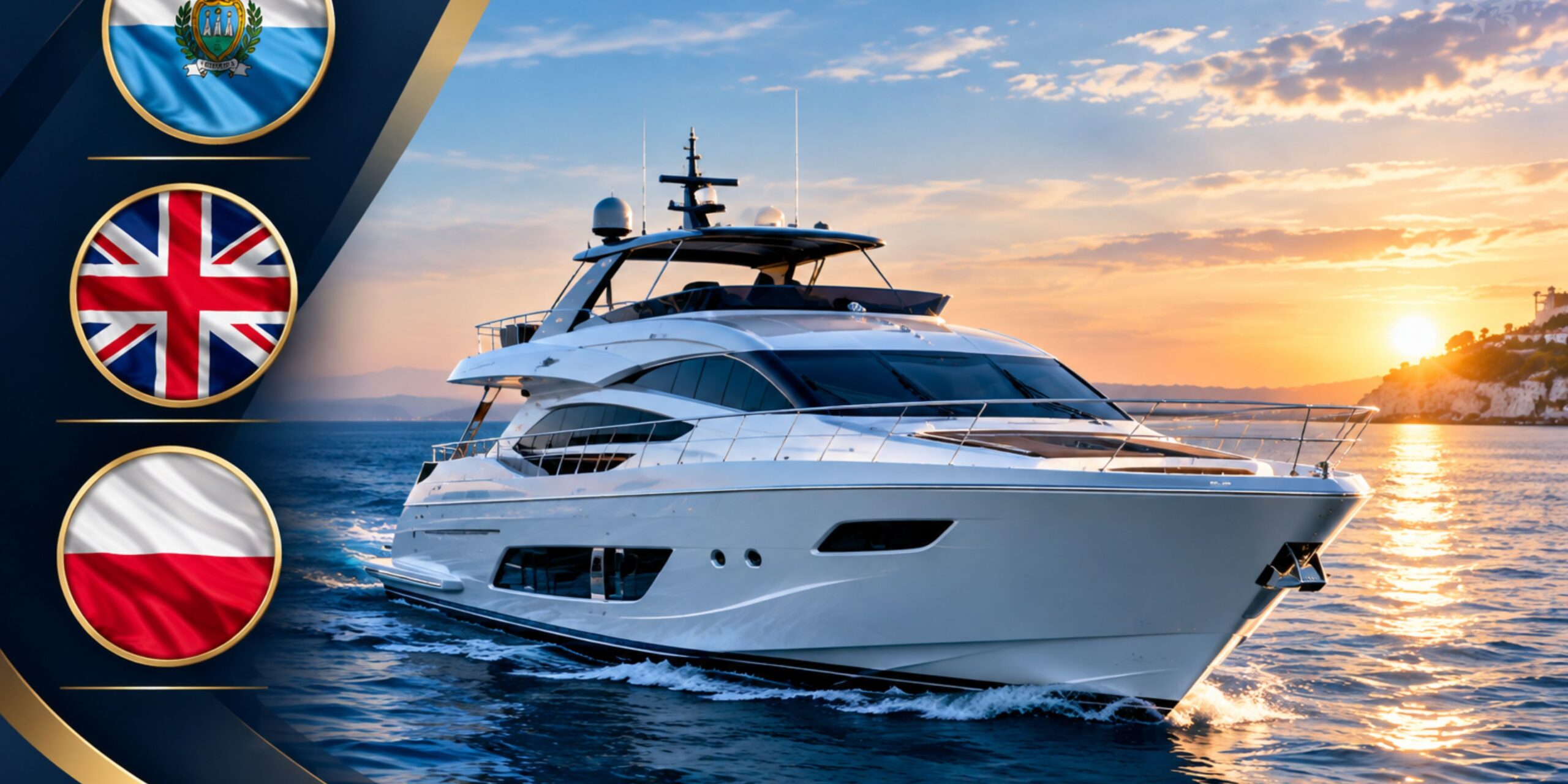
Poland has grown in popularity for smaller and mid-sized pleasure craft thanks to its digital REJA24 registration system and comparatively low fees, though 2026 reforms have introduced stricter verification for foreign-owned vessels.
UK Part 1 registration suits owners who want full title registration with mortgage recording, which matters for financed vessels or anyone planning to sell internationally with a clean, bankable ownership record.
San Marino yacht registration has positioned itself as a flexible European flag with straightforward documentation requirements, appealing to owners who want EU-adjacent recognition without the heavier compliance load of some larger registries.
Which Flag Is Right for You?
The right choice depends on the vessel’s size, how it will be used, and where it will spend most of its time. For most private owners transitioning away from Delaware documentation, the decision comes down to balancing cost, EU access, and administrative simplicity against the specific compliance obligations each registry now expects.
Frequently Asked Questions
Do I need a deletion certificate before registering under a new flag? Yes. Most international registries require proof that the vessel has been removed from its previous documentation before they will accept a new registration application.
How long does the Delaware-to-foreign-flag deletion process take? Timelines vary, but once a complete filing is submitted to the National Vessel Documentation Center, processing is typically measured in weeks rather than months, provided there are no outstanding liens.
Can I keep my Delaware LLC after moving to a new flag? Yes. Deleting the vessel’s U.S. documentation does not require dissolving the Delaware company; many owners keep the LLC structure for liability and privacy purposes while flagging the vessel elsewhere.
Is Poland still a good option after its 2026 registration reforms? Poland remains competitive for smaller pleasure craft, though foreign owners should now budget for a preliminary inspection and a recurring two-year data confirmation under the new rules.
What happens if there’s a mortgage on the vessel? The mortgage must be satisfied, or the mortgagee must provide written consent, before the National Vessel Documentation Center will process a deletion request.
Who typically handles the deletion filing? Owners can file directly, but many use a documentation service familiar with Delaware entity structures to avoid errors that commonly delay approval.
Final Thoughts
Moving a vessel away from Delaware-based U.S. documentation is rarely complicated once the paperwork is in order, but it does require sequencing: confirm the vessel is lien-free, file for deletion with accurate supporting documents, and only then begin the new flag’s registration process. Choosing the right next flag matters just as much as the deletion itself — the best option is the one that matches the vessel’s size, cruising plans, and the level of ongoing compliance the owner is prepared to maintain.
Owners who treat deletion and re-flagging as a single coordinated process, rather than two unrelated tasks, consistently avoid the gaps in documentation that cause the longest delays. Lining up the new registry’s requirements before filing the deletion request, rather than after, is the single most effective way to keep the transition on schedule.